
Jacobson’s Progressive Muscle Relaxation is a structured technique that asks you to tense one muscle group for several seconds, then release it and notice the contrast.
You move through the body in order, typically starting at the hands and working toward the face, or the reverse. The goal is to teach your nervous system the physical difference between tension and release so you can recognize and interrupt tension before it builds.
Physician and physiologist Edmund Jacobson created the method after two decades of laboratory research on muscle tension and its link to anxiety, publishing his findings in the book “Progressive Relaxation” in 1929 and expanding it in a 1938 edition.
His 1934 book for general readers, “You Must Relax,” became a bestseller and was translated into thirteen languages, which is largely how the technique reached beyond clinical settings.
The original protocol worked through fourteen distinct muscle groups. Modern adaptations often compress this into seven or four groups for time, but the tense and release principle stays the same in every version.
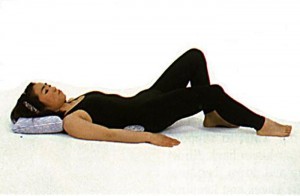
How Jacobson’s Progressive Muscle Relaxation Works
PMR works by lowering activity in the sympathetic nervous system, the branch of your nervous system responsible for the fight or flight response.
Deliberately tensing a muscle and then releasing it produces a drop in that muscle’s baseline tension that is easier to feel than relaxation alone would be.
Over repeated sessions, this contrast trains you to notice smaller, everyday levels of tension in your shoulders, jaw, or hands, often before you consciously register that you feel stressed.
The technique pairs naturally with slow, deep breathing. Breathing out during the release phase of each muscle group reinforces the physical signal to your body that the tense period has ended.
The Full Muscle Group Sequence
Work through each group in order. Tense each one for five to seven seconds, then release completely and pause for fifteen to twenty seconds before moving to the next group. Notice the feeling of release each time rather than moving on automatically.
| Order | Muscle Group | How to Tense |
|---|---|---|
| 1 | Hands and forearms | Make a tight fist |
| 2 | Upper arms | Bend the elbow and tense the bicep |
| 3 | Shoulders | Pull shoulders up toward the ears |
| 4 | Forehead | Raise eyebrows as high as possible |
| 5 | Eyes and cheeks | Close eyes tightly, scrunch cheeks |
| 6 | Jaw | Bite down gently and clench |
| 7 | Neck | Gently press head back or tuck chin |
| 8 | Chest | Take a deep breath and hold, tensing the chest |
| 9 | Back | Arch the back slightly, pulling shoulder blades together |
| 10 | Abdomen | Tighten the stomach muscles |
| 11 | Buttocks | Squeeze the glutes |
| 12 | Thighs | Press knees together and tense the thighs |
| 13 | Calves | Point toes toward the shin |
| 14 | Feet | Curl toes downward |
If a full fourteen group sequence feels like too much on a first attempt, a shortened four group version (hands and arms, face and neck, chest and abdomen, legs and feet) still follows the same tense and release principle.
Preparing for a Session
Where and how you practice affects how easily the technique works. Before starting, address the following:
- Choose a quiet room with dim lighting and a comfortable temperature.
- Sit in a supportive chair or lie down on a bed, with a pillow under the knees or feet if lying down.
- Wear loose, comfortable clothing that does not restrict movement at the waist or wrists.
- Turn off notifications and let others in the household know you need ten to twenty uninterrupted minutes.
- Set a consistent time of day, since a regular slot builds the habit faster than practicing at random times.
Learning to Breathe Alongside Relaxation
Breathing awareness is a core part of the Jacobson method, not a separate add on. Most people breathe shallowly through the chest when stressed, and PMR works better when paired with slower, fuller breaths.
Place one hand on your chest and one on your belly. Breathe in slowly through the nose so the hand on your belly rises more than the hand on your chest, then exhale slowly through the mouth.
Pair each muscle release in the sequence with an exhale, so the physical release and the breath happen together. This does not mean holding your breath or forcing a specific count. The aim is simply to notice the air entering and leaving rather than breathing on autopilot.
Jacobson’s Progressive Muscle Relaxation vs. Other Relaxation Techniques
| Technique | Core Action | Typical Session Length | Best For |
|---|---|---|---|
| Jacobson’s Progressive Muscle Relaxation | Tense then release muscle groups in sequence | 5 to 20 minutes | People who hold tension physically and want a concrete physical marker of relaxation |
| Deep breathing exercises | Slow, controlled breathing patterns | 3 to 10 minutes | Quick in the moment stress relief, no privacy needed |
| Mindfulness meditation | Observing thoughts and sensations without reacting | 10 to 30 minutes | Reducing rumination and improving present moment awareness |
| Guided imagery | Visualizing a calming scene with a narrator or recording | 10 to 20 minutes | People who respond well to visualization rather than physical sensation |
Who Benefits from This Technique
Research on Jacobson’s Progressive Muscle Relaxation spans a wide range of populations. Reported benefits include reduced anxiety and improved sleep quality in COPD patients, reduced dental anxiety in children during dental visits, lower anxiety and higher happiness scores in older nursing home residents, and improved sleep quality among healthcare workers in high stress hospital settings.
The consistent thread across these studies is a measurable drop in self reported anxiety after repeated practice, not just a single session.
Conclusion
Jacobson’s Progressive Muscle Relaxation gives you a concrete, physical way to notice and release tension rather than relying on willpower alone.
The fourteen group sequence takes practice to memorize, but the underlying principle, tense fully then release completely, works even in a shortened four group version.
Start with a quiet ten minute window once a day, pair each release with an exhale, and give the practice a few weeks before judging whether it fits your routine.