
Hunger without eating comes from a hormone called ghrelin, which your stomach releases on a schedule built around your normal meal times, whether or not food is actually available.
Ghrelin travels to the hypothalamus, the part of the brain that controls appetite, and triggers the physical sensations of hunger such as stomach growling and food focused thoughts.
This means your body can feel hungry at 1 p.m. simply because you usually eat lunch then, even if you are not truly short on energy.
Ghrelin levels naturally rise and fall in waves throughout the day, so a wave of hunger that feels intense at first often fades within 15 to 20 minutes if nothing is eaten.
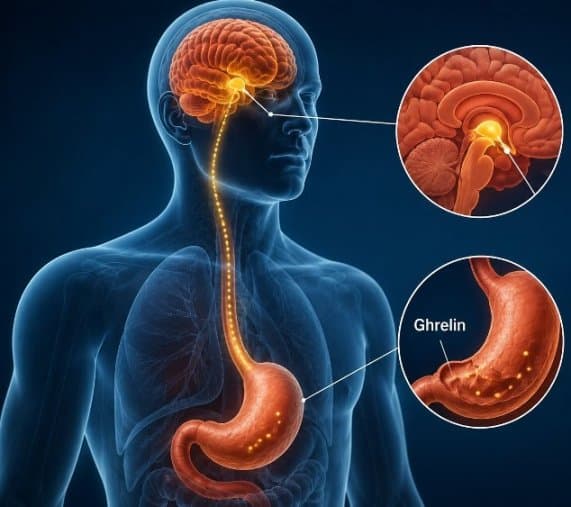
How Hunger Hormones Work Together
Hunger is regulated by a group of hormones working together. Ghrelin increases appetite, leptin signals fullness, and cortisol responds to stress by raising blood sugar and driving cravings for high calorie foods.
These hormones are highly sensitive to sleep and stress. Research found that cutting sleep to four hours a night for two nights lowered leptin and raised ghrelin, and a related population study linked short sleep to a pattern of higher ghrelin, lower leptin, and higher body weight.
A separate line of research on circadian rhythms found that shift work and irregular sleep schedules disrupt these same hormones even when total sleep hours are normal.
Stress works through a different but related pathway. Cortisol released during stress increases blood sugar and often drives cravings for fatty or sugary foods, even when the body has enough stored energy.
Managing hunger without eating usually means managing these two upstream drivers, sleep and stress, rather than fighting the hunger signal directly.
Check This: Why Does Xanax Make You Hungry?
Non Food Ways to Quiet Hunger Signals
Several sensory tricks can reduce hunger within minutes because they mimic the physical experience of eating without any calories. These work well for a single wave of hunger rather than for going without food for many hours.
Chew gum. A study found that people who chewed gum for 15 minutes before a meal ate about 10 percent fewer calories, and a broader systematic review of clinical trials found that most studies showed a real reduction in rated hunger from gum chewing.
Researchers believe the repeated jaw motion and saliva release send a false signal to the brain that food has arrived, a process called sham feeding.
Brush your teeth or use mint. The strong scent and taste of mint appears to act as a natural appetite signal.
One study found that people who regularly smelled peppermint ate about 23 percent fewer calories over a week. Brushing your teeth has a similar effect for many people, both from the mint flavor and from the mental cue that eating time is over.
Get moving instead of sitting with it. Distracting yourself with a short walk, a call to a friend, or a quick task can break the mental loop that keeps hunger in your attention.
This strategy works well for hunger driven by boredom or emotions rather than true physical hunger. A short activity can shift your focus long enough for the urge to pass. Noticing the urge without judging yourself also makes the distraction easier to maintain.
Drink something if your situation allows it. Thirst and hunger use overlapping signals in the brain, so many people who think they are hungry are actually low on fluids.
If your situation allows drinking, a glass of water or unsweetened tea can resolve the sensation within 15 minutes. This does not apply if you are fasting without water, which is covered in the next section.
How to Manage Hunger During Fasting Without Water or Food
When drinking is not an option, such as during Ramadan daylight hours or a medical fast before a procedure, hunger management shifts almost entirely to distraction, rest, and planning rather than any substitute for food or fluid.
Staying occupied with meaningful tasks is the most consistently recommended strategy across fasting guides, since idle time makes hunger signals much more noticeable.
Plan your day around your hardest hours. Many people find the two or three hours before a fast ends the most difficult, so scheduling work, prayer, exercise, or errands during that window keeps attention off food.
Choosing a busy workday, rather than a quiet one, can make a full day of fasting pass with less noticeable hunger.
Protect your sleep the night before. Poor sleep raises ghrelin and makes any fast feel harder the next day, so going to bed earlier and prioritizing a full night of rest before a demanding fasting day reduces hunger intensity.
Rest instead of pushing through fatigue. A short nap in the early afternoon, where your schedule allows it, can reduce both the fatigue and the hunger that build up later in a fasting day.
Be careful with accidental swallowing. If you are fasting in a way that also excludes drinking, remember that rinsing your mouth, brushing your teeth, or bathing can technically break a water restricted fast if you swallow. Rinse and spit carefully rather than swallowing.
Can Appetite Suppressant Products Help
Some over the counter and prescription products are marketed to reduce hunger, and the evidence behind them varies widely by ingredient. It is worth understanding what each type actually does before trying one.
Glucomannan, a soluble fiber from the konjac plant, absorbs water in the stomach and expands to create a physical feeling of fullness.
Clinical trials using doses around 1 to 4 grams per day taken with a full glass of water before meals have shown modest reductions in hunger and small amounts of extra weight loss. Because it needs to be taken with plenty of water to work safely, it is not a fit for situations where drinking is off limits, and swallowing it without enough fluid carries a rare risk of it swelling in the throat.
Orlistat, sold over the counter as Alli in many countries, does not suppress appetite directly. It blocks a portion of dietary fat from being absorbed, which reduces total calories taken in from a meal, though it commonly causes digestive side effects like oily stools when fat intake is high.
Caffeine and green tea extract have a mild, short term appetite suppressing effect for some people, largely through their stimulant properties, though they can cause jitteriness, disrupted sleep, or a faster heart rate in sensitive individuals.
Prescription options, including GLP 1 medications, work on the same hormone pathways as ghrelin and leptin and produce much larger reductions in appetite than any over the counter product, but they require a prescription and monitoring by a doctor because of their strength and side effect profile.
Anyone considering a suppressant, over the counter or prescription, should check for interactions with existing medications and talk to a pharmacist or doctor first, especially anyone with a heart condition, anxiety, or a history of disordered eating.
Read This: Worst Foods to Eat Before Bedtime
When Persistent Hunger Signals Something More Serious
Hunger that returns shortly after a full meal, day after day, is called polyphagia, and it is different from the normal hunger that fades once you eat.
Polyphagia is one of three classic warning signs of diabetes, alongside excessive thirst and frequent urination, because the body cannot move glucose out of the blood and into cells for energy).
Thyroid conditions, certain medications, and blood sugar swings can also drive this kind of hunger that does not respond normally to eating.
A doctor can check for these causes with a physical exam, a review of your medications and sleep habits, and blood tests such as fasting glucose or an A1C test.
If your hunger is intense, comes with increased thirst or urination, unexplained weight loss, or fatigue, or does not ease after a normal meal, it is worth bringing up with a doctor rather than continuing to manage it on your own.
Conclusion
Feeling hungry without eating or drinking usually comes down to hormones, habits, and timing rather than a true shortage of energy.
Sensory tricks, better sleep, and stress management handle most everyday hunger, while planning and distraction carry people through longer fasts where food and water are both off the table.
If hunger keeps returning right after meals or shows up with other symptoms, that pattern is worth a conversation with a doctor rather than another workaround.