
Foods disrupt sleep when they cause digestive discomfort, spike blood sugar, or contain stimulants that keep the brain alert.
The body needs to slow digestion and lower core temperature to fall asleep, and several common foods work against both processes.
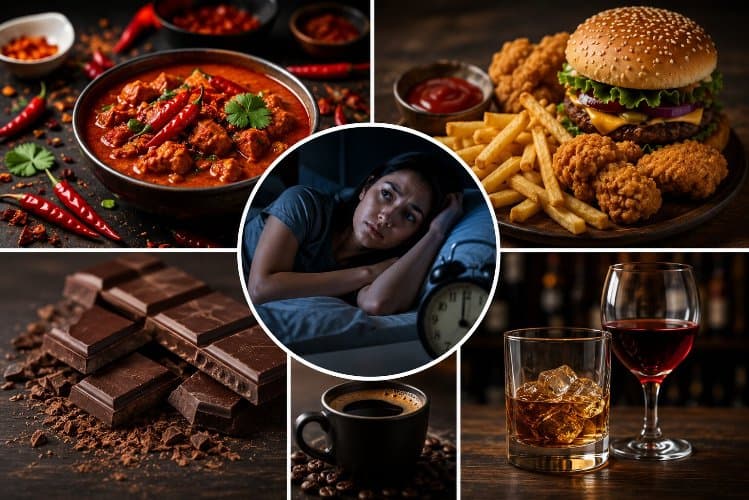
Before the list, here is what makes a food a poor choice close to bedtime.
| Factor | Why It Matters |
|---|---|
| High fat content | Fat takes longer to digest, which keeps the digestive system active during a time it should be winding down |
| Acidity | Acidic foods can trigger reflux, especially when lying flat shortly after eating |
| Added sugar | A sugar spike followed by a crash can interrupt sleep in the middle of the night |
| Stimulant content | Caffeine and certain compounds in chocolate keep the nervous system alert |
| Alcohol content | Alcohol disrupts the second half of the sleep cycle even though it can cause initial drowsiness |
See Also: Side Effects of Eating Fruits at Night
1. Spicy Foods
Spicy foods raise body temperature and can cause acid reflux, both of which work against falling asleep.
Capsaicin, the compound that gives chili peppers their heat, has been linked to disrupted sleep.
Eating a spicy meal late at night also raises the chance of heartburn once a person lies down, since lying flat makes it easier for stomach acid to move upward.
2. Fried and Fatty Foods
Fried and fatty foods take longer for the stomach to break down, which keeps the digestive system working hard during a time the body should be relaxing. The high fat meals close to bedtime are associated with more nighttime awakenings.
A late night order of fries or fried chicken can sit in the stomach for hours, and that prolonged digestion often shows up as restless or shallow sleep.
3. Chocolate
Chocolate contains both caffeine and theobromine, two stimulant compounds that can keep the brain alert at bedtime. Dark chocolate has the highest concentration of both.
Even a small amount eaten in the evening can be enough to delay sleep onset in people who are sensitive to caffeine.
4. Caffeinated Drinks
Coffee, black tea, energy drinks, and some sodas all contain caffeine, a stimulant that blocks the sleep promoting chemical adenosine in the brain.
Caffeine has a half life of about 5 hours, meaning half of it is still active in the body that long after intake. That is why a cup of coffee at 6pm can still affect a person trying to fall asleep at midnight.
5. Alcohol
Alcohol can make a person feel drowsy at first, but it disrupts the second half of the sleep cycle once the body starts metabolizing it.
Alcohol reduces rapid eye movement (REM) sleep, the stage linked to memory and mood regulation.
This is why people who drink before bed often wake up earlier than planned and feel less rested, even after a full night in bed.
6. High Sugar Desserts and Processed Snacks
Sugary desserts and processed snacks cause a fast rise in blood sugar followed by a drop a few hours later, and that drop can wake a person during the night. High sugar intake before bed as a factor linked to more fragmented sleep.
Cookies, candy, and sweetened cereal are common examples that feel harmless but can interrupt deep sleep stages.
7. Citrus Fruits
Citrus fruits like oranges, grapefruit, and lemons are highly acidic, and that acidity can cause reflux when eaten right before lying down.
The acid relaxes the lower esophageal sphincter, the muscle that normally keeps stomach acid from moving back up.
People who already deal with acid reflux or GERD are especially likely to notice symptoms after a late citrus snack.
8. Tomato Based Sauces
Tomato based foods, including pasta sauce, pizza, and salsa, are acidic in the same way citrus fruits are, which makes them another common cause for nighttime reflux.
A heavy pasta dinner with tomato sauce close to bedtime combines acidity with a large portion size, which adds to the digestive load.
The combination of acid and a full stomach is one of the more common reasons people report waking up with heartburn.
9. Large Portions of Red Meat
A large portion of red meat is high in protein and fat, both of which slow digestion and keep the body working through the night.
The heavy, protein dense meals close to bedtime are linked to more difficulty falling asleep compared with lighter meals.
A modest portion earlier in the evening is far less likely to cause this effect than a large steak or burger eaten right before bed.
Comparison Table: Worst Bedtime Foods at a Glance
| Food | Main Problem | Better Alternative |
|---|---|---|
| Spicy foods | Raises body temperature, triggers reflux | Mild herbs and seasoning |
| Fried and fatty foods | Slows digestion | Grilled or baked lean protein |
| Chocolate | Contains caffeine and theobromine | A small piece of fruit |
| Caffeinated drinks | Blocks sleep promoting brain chemicals | Herbal tea such as chamomile |
| Alcohol | Disrupts REM sleep | Water or decaffeinated tea |
| High sugar desserts | Causes a blood sugar crash | A handful of nuts |
| Citrus fruits | Triggers acid reflux | A banana |
| Tomato based sauces | Triggers acid reflux | Plain whole grain toast |
| Large portions of red meat | Slows digestion with heavy protein and fat | A small serving of yogurt |
Conclusion
The foods on this list are not off limits at every hour, the timing is what matters most.
Eating spicy, fried, sugary, acidic, or alcoholic items several hours before bed gives the body time to process them before sleep begins.
For an evening snack, foods that are light, low in fat, and low in sugar give the digestive system the easiest path to a restful night.