
An iron infusion corrects low iron fast, but the days right after still matter. Many patients take a pill, hit the gym, or book a blood test too soon, and each of those choices can throw off recovery or make results hard to read.
Knowing what to skip for the first few days helps the infusion actually work the way it is meant to.
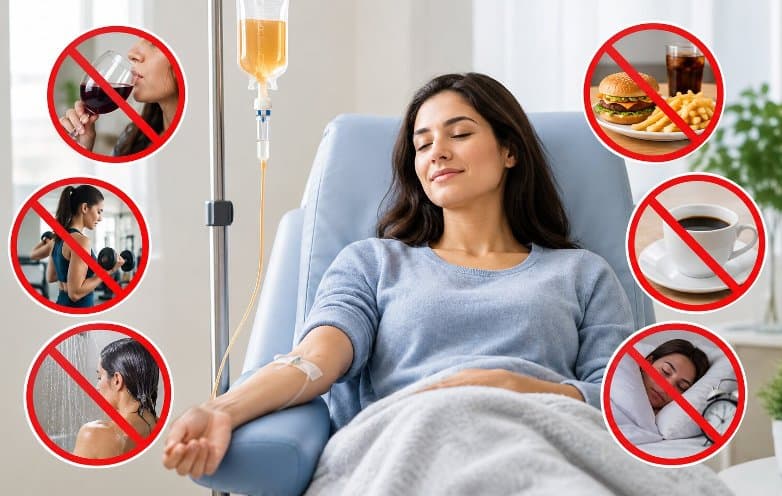
What Happens to Your Body Right After an Iron Infusion
Your body starts absorbing the iron into your bloodstream within minutes. A nurse will usually keep you at the clinic for about 30 minutes after the drip finishes to check for a reaction. Most people feel fine and drive themselves home the same day.
The days right after the infusion matter just as much as the appointment itself. What you do, and what you avoid, can change how smoothly your body adjusts and how accurate your future blood tests are.
Do Not Take Oral Iron Supplements Right Away
Stop your iron pills or liquid iron for at least five to seven days after the infusion, unless your doctor tells you otherwise.
Your bloodstream already has a large dose of iron circulating. Adding pills on top does not speed up recovery. It mostly just raises your risk of nausea and stomach cramps.
Some clinics ask patients to hold oral iron for closer to a week. Ask your provider for the exact timeline before you leave your appointment, since it can depend on your dose and the type of iron you received.
Do Not Schedule a Ferritin Test Too Early
This is one of the most common mistakes patients make. Ferritin, the marker doctors use to check your iron stores, spikes right after an infusion and stays artificially high for weeks. Testing too soon gives a misleading number that does not reflect your true iron levels.
The general waiting periods look like this.
| Infusion dose | Recommended wait before retesting |
|---|---|
| 100 to 500 mg | At least one to two weeks |
| 1000 mg or more | Four to eight weeks, and up to three months for the most accurate read |
Your hemoglobin can be checked sooner, often around four weeks, since it responds differently than ferritin. Ask your provider which test they plan to use and when.
Do Not Push Through Strenuous Exercise
Your circulatory system just processed a concentrated dose of iron. Heavy lifting, intense cardio, or a hard gym session the same day can bring on dizziness, lightheadedness, or extra strain on the IV site.
Plan for the following.
- Rest for the remainder of the day the infusion happens.
- Stick to light walking for the first 24 to 48 hours.
- Wait until any fatigue or joint aches settle before returning to your normal workout routine.
Light activity like a short, slow walk is fine and can even help circulation. Save the heavy lifting and high intensity training for a day or two later.
Do Not Drink Alcohol Right After Your Infusion
Hold off on alcohol for at least 24 hours, and longer if you still feel unwell. Your liver is busy storing the new iron as ferritin, and alcohol adds oxidative stress to the same organ.
Combining iron overload with alcohol use raises the risk of liver strain more than either factor alone.
Alcohol can also worsen dehydration, which makes common post infusion symptoms like headache or dizziness feel worse. If you are unsure how long to wait based on your health history, ask your doctor directly.
Do Not Ignore Changes at the IV Site
Some soreness, redness, or mild bruising near the injection point is normal. What is not normal is spreading redness, warmth, swelling, or a rash that gets worse instead of better over a few days.
A rare but documented side effect is skin discoloration near the IV site. This happens when the infusion leaks into the surrounding tissue instead of staying in the vein.
If you notice new discoloration, swelling, or pain that increases rather than fades, contact your clinic.
Do Not Skip Meals or Overload on Caffeine and Calcium
Your body needs steady fuel to build new red blood cells over the coming days. Skipping meals slows that process down.
Pair iron rich foods with vitamin C, from citrus, bell peppers, or strawberries, since vitamin C helps your body use iron more effectively.
Caffeine and high calcium foods mainly interfere with iron absorption when you are also taking oral iron supplements.
If your infusion is your only source of iron for now, this matters less, since the iron is already in your bloodstream rather than waiting to be absorbed through your gut.
Once you restart oral iron, though, keep coffee, tea, and dairy at least two hours away from your iron dose.
Do Not Dismiss Severe Symptoms as Normal
Most side effects are mild and fade within one to three days. These include a metallic taste, mild nausea, flushing, headache, and fatigue.
A smaller number of people notice joint or muscle pain that shows up a few hours to a day later, which usually resolves on its own.
Severe reactions are rare, but you should never wait them out. Call your doctor or seek emergency care immediately if you notice any of the following.
- Difficulty breathing or tightness in your chest
- Swelling of your lips, mouth, tongue, or throat
- A rash or hives spreading across your body
- Chest pain
- A fever that develops in the days after your infusion
Fewer than one in 100 people have a severe allergic reaction, but acting fast matters if it happens.
Do Not Assume One Infusion Means You Are Done
A single infusion raises your iron stores, but it does not always fix the reason your iron dropped in the first place.
Heavy periods, gastrointestinal bleeding, poor absorption, and pregnancy can all cause iron deficiency to return if the underlying cause is not addressed.
Keep your follow up appointment. Your doctor may check your hemoglobin around four weeks out and your ferritin later, then decide whether you need another infusion or a maintenance plan.
Conclusion
An iron infusion does most of the work for you, but the choices you make right after still shape how well it takes.
Skip the pills, ease off the gym, hold the alcohol, and give your body time to settle. Watch the IV site and take severe symptoms seriously.
Small precautions in the first few days help the infusion do its job and keep your recovery on track.