
Sooner or later, someone who tests at home finds a vial of expired glucose test strips in a drawer.
The meter still gives a number, so the date is easy to ignore, but nothing on the screen tells you whether that number is right.
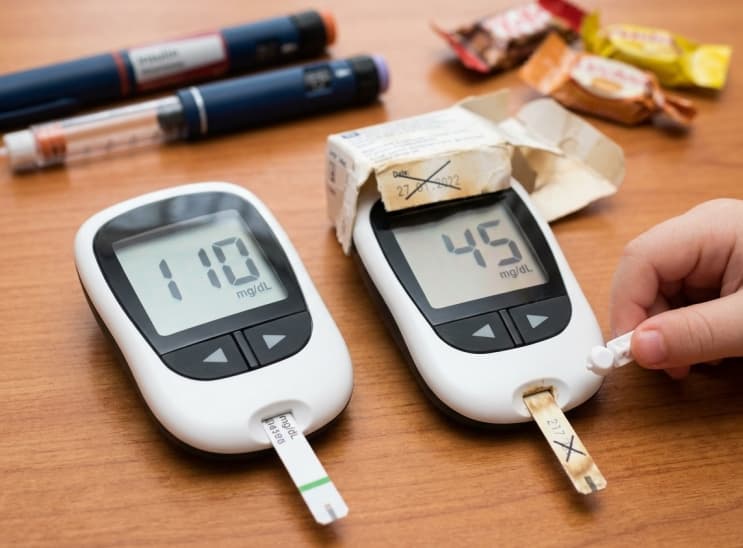
What Happens When You Use Expired Glucose Test Strips?
You get a glucose reading you can’t fully trust. Expired glucose test strips may still work, but the chemistry on them breaks down with age, and the manufacturer no longer vouches for the result. The error can push a reading too high or too low, and the number on the meter won’t tell you which.
The U.S. Food and Drug Administration (FDA) says that using expired strips could lead to incorrect results from your glucose meter, and that incorrect results can put you at risk for serious health complications and even death. That warning matters most for people who make treatment decisions from each reading.
Here is how it plays out. If you take insulin based on your meter and an expired strip reads too high, you may take more than you need and your glucose can drop too low. If it reads too low while you are actually high, you may skip a correction dose you needed.
People who don’t use insulin can still be misled about how a meal or a medication is affecting them.
Why Glucose Test Strips Have an Expiration Date
The date on the vial is the last day the manufacturer has data showing the strip works as labeled. Each strip carries enzymes and other chemicals that react with the glucose in your blood, and those chemicals don’t stay stable forever.
Tests strip performance over time and works out how long that performance stays valid, for example 18 or 24 months. It uses that period to set the date printed on each vial. It cannot guarantee how a strip performs after that date.
Explore More: What should you do if you use expired nasal spray?
Why Some Expired Strips Seem Fine While Others Do Not
Age is only one factor. Brand, storage, and handling all change how a strip behaves, which is why two people can have very different experiences with expired glucose test strips.
Every brand uses different enzymes and chemicals. One company may pick a less stable enzyme for better accuracy, while another may give up some accuracy for a longer shelf life. Storage matters too. The strips must be stored properly to give accurate results, and it tells users to follow the instructions sold with their strips.
A strip can read fine in the normal range after it expires and still show errors at the high or low ends. That means one side by side check at a normal glucose level can’t prove old strips are safe.
Strips are probably fine for some period past the date, but nobody knows how long, and the older the strip, the more likely it fails. Not to use strips past the date, and the FDA warns that expired strips can give incorrect results.
What to Do If You Already Used Expired Test Strips
Stop using the vial and confirm your latest reading with an unexpired strip before you act on it. Then work through these steps.
- Throw out the expired vial and open one with a future date.
- Test again with an unexpired strip and compare the two readings.
- Run a control solution test with the new strips. Regular control solution checks to confirm your strips and meter work together, and your meter’s instructions say how often.
- If you suspect low glucose, take a fingertip reading with a fresh strip.
- Tell your provider or pharmacist if you changed an insulin or medication dose based on readings from the expired strips.
If you have severe symptoms, call your local emergency number. If a strip gave a wrong result that caused a problem, the FDA asks you to report it to MedWatch, its voluntary reporting program.
How to Avoid Using Expired Glucose Test Strips
Check the date printed on the vial each time you open a new one, and buy only new, unopened vials. The FDA recommends new, unopened vials and says not to buy previously owned strips.
Previously owned strips carry extra risks. They may have been stored badly or already expired, the vial may have small amounts of blood on it, and the expiration date may have been changed or covered up. Cheap flyers and online sellers are common sources.
If cost is the reason you are stretching old strips, talk to your health care provider about where to buy strips for your meter or what to do if you can’t afford them. Also check your package insert to see whether your brand sets a separate limit after you open the vial.
The Bottom Line
An expired strip turns a routine check into a guess. Replace the vial, confirm any odd reading with a fresh strip, and tell your provider if you adjusted a dose based on old strips.
If cost is what keeps you reaching for the drawer, ask about options before you stretch a vial.