
Watery eyes during a bowel movement happen because straining increases pressure inside your body. This pressure can affect blood vessels and nerves around your eyes, leading to tearing.
When you push hard, you often hold your breath. This is called the Valsalva maneuver. It raises pressure in your chest and head, and that pressure can squeeze tiny blood vessels near your tear glands.
This is not the same as crying from emotion. It is a physical reaction to pressure, similar to what happens when you cough hard or lift something heavy.
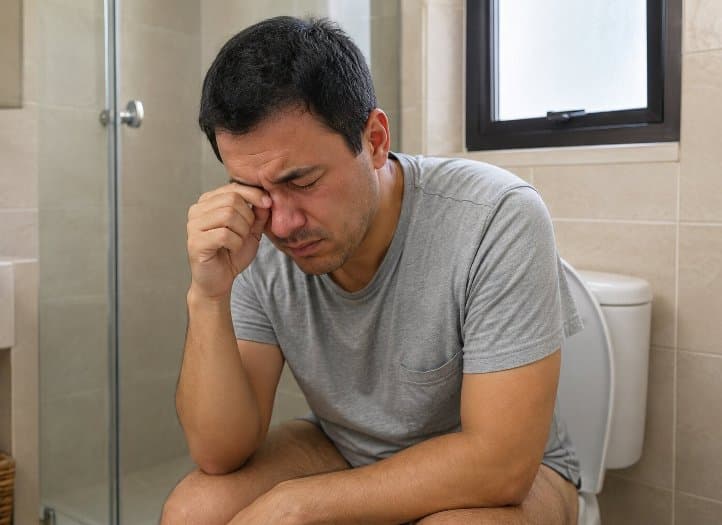
How Straining Affects Blood Pressure And Tears
Straining causes a quick rise in blood pressure, followed by a drop once you relax. This swing in pressure is the main reason your eyes may water.
During the rise in pressure, blood vessels in your face and around your eyes can become slightly engorged. Once the strain ends and pressure drops, the body’s nervous system reacts, and tearing can follow as part of that reflex.
This same pressure change is linked to other symptoms, like a flushed face, sweating, or feeling lightheaded. Watery eyes are often just one part of this bigger reaction.
Is Watery Eyes During Bowel Movements a Sign Of a Vasovagal Response?
Yes, in many cases watery eyes are part of a vasovagal response. This is a nervous system reflex triggered by straining, and it can affect several parts of the body at once.
A vasovagal response can cause sweating, paleness, dizziness, nausea, and tearing, all from the same underlying cause. The vagus nerve runs close to areas that control tear production, so it can be affected during this reflex.
If watery eyes happen along with dizziness or a racing heart, this points more strongly to a vasovagal cause rather than a simple eye irritation.
Common habits For Watery Eyes On The Toilet
Several habits can make watery eyes during a bowel movement more likely.
| Habits | Why It Happens |
| Straining due to constipation | Increases pressure in the chest and face |
| Holding your breath while pushing | Raises internal pressure quickly |
| Sitting for a long time | Adds ongoing pressure on blood vessels |
| Dehydration | Can make the nervous system reflex stronger |
| Pre existing dry eye | Eyes may react more easily to pressure changes |
How Constipation Makes Eye Watering More Likely
Constipation is a major reason for stronger straining, and stronger straining means more pressure changes in the body. This makes watery eyes more likely.
Hard stool needs more force to pass. This force often comes with breath holding, which raises pressure in the chest and head for several seconds at a time.
Softening your stool through diet and hydration can reduce how hard you need to push, which lowers the chance of watery eyes and other pressure related symptoms.
How To Reduce Watery Eyes When You Poop
A few simple changes can lower how often this happens.
- Drink enough water each day to keep stools soft and easy to pass.
- Add more fiber to your meals through fruits, vegetables, and whole grains.
- Avoid holding your breath while pushing. Try to breathe slowly instead.
- Do not rush. Give your body time to pass stool without forcing it.
- Use a footstool to raise your knees, which can reduce how hard you need to strain.
- If your eyes water often outside the bathroom too, get them checked for dryness or irritation.
When Watery Eyes During a Bowel Movement Need Medical Attention
Watery eyes alone are usually not a medical concern. However, you should pay attention if other symptoms appear at the same time.
See a doctor if you also feel chest pain, notice a very fast or irregular heartbeat, faint, or have blood in your stool. These can be signs of a problem that needs evaluation.
If watery eyes happen only during hard bowel movements and go away quickly, this is usually just part of a normal pressure response.